

Under construction …
Under construction …
Under construction …
Under construction …
Under construction …
Under construction …
第一章 总体介绍
未来技术学院红鸟硕士项目(又称“红鸟硕士班”)是香港科技大学(广州)(以下简称“港科大(广州)”)践行与推广融合学科“枢纽-学域理念”的第一个“脚印”,旨在培养学术界和工业界顶尖人才及未来领袖。为此,红鸟硕士项目建立了一套透明、公平和公正的创新招录机制,对申请人开展多维度的综合能力评价,以在全球范围内招录符合我校创新高等教育范式要求的优质生源。
第二章 招录机制概述
红鸟硕士项目突破传统以学科专业划分申请人的招录机制,对申请人不限制专业,通过“个人申请-委员会审核”机制,面向全球招生,全年滚动遴选,择优录取,主要包括以下四个渠道:
- 申请-审核制
申请人需在我校官网提出申请,若成功通过评分系统初选、委员会人工评审、线下面试等选拔环节,将获得红鸟硕士项目遴选与面试委员会的录取资格。 - 红鸟挑战营
申请人报名并通过遴选程序后,获选参加我校官方组织的红鸟挑战营,若在营期间表现出色且成功通过红鸟硕士项目遴选与面试委员会组织的审查和面试,将获得录取资格。 - 推荐-审核制
申请人若获得我校认定的学术机构(目前只有与香港科技大学开展联合办学的广州大学)选拔推荐,可直接进入面试阶段。若成功通过红鸟硕士项目遴选与面试委员会的面试考核,申请人将获得录取资格。 - 提名-录取制
由我校认定的海外合作大学提名的候选人,经红鸟硕士项目遴选与面试委员会审核通过后,可获得直接录取资格。
基于公平性原则,申请人通过上述渠道在同一届官方招生系统中重复申请红鸟硕士项目的行为,将被视为违反招生规定,其相应的所有申请均将不被受理(本机制下文特别规定的”居中“情况除外)。
第三章 委员会制度
为确保红鸟硕士项目招录程序的合规性及全流程工作质量,我校特设立多级招生委员会,各委员会职责如下:
- 招生指导委员会(Admission Steering Committee)
负责制定招生总体方针政策与发展策略。 - 遴选与面试委员会(Selection & Interview Committee)
由各枢纽/学域及学院的教员(Faculty)联合组成,负责完成遴选、面试和录取推荐等全过程工作。 - 未来技术学院招生委员会(CFT Admission Committee)
负责制定招录实施方案,并指导与监管招生行政团队的具体执行工作。 - 招生申诉委员会(Admission Appeal Committee)
负责审理红鸟硕士项目招录工作相关申诉,整体监督招生程序合规性。
第四章 “申请-审核制”的主要招录阶段
- 申请阶段
基于融合学科的“枢纽-学域理念”和创新教学模式,红鸟硕士项目的新生在注册入学后的前六个月需进行自主探索,之后确定项目方向、项目团队与学术导师。因此,申请人无需提前确定导师和选择专业,可选择提交研究计划和推荐信,但须按要求准备完整的能力佐证材料,并通过港科大(广州)的申报系统提交正式申请。请参见在线申请系统(OAS)网站的最新申请指引。 - 初选阶段
随着申请数量的逐年递增,为提升招录工作质量和效率,红鸟硕士项目设置了高校白名单筛选“过滤器”,利用设定条件的评分系统对申请人进行自动筛选。通过初选的申请人将进入下一阶段的遴选,而未通过初选的申请人将收到拒信。
对于未通过初选但具有特殊才能或其他突出表现的申请人,我们将鼓励其申请港科大(广州)的“红鸟挑战营”,详情请关注官网信息。 - 遴选阶段
通过初选后,红鸟硕士项目的评分系统将为每份申请材料自动匹配至少三位遴选与面试委员会的评委,以确保评委小组既能做出专业性评价,又能兼顾多角度综合评审。评委根据申请人的理科、工科、文科、艺术、设计、商科、管理、医科等不同学科背景,对数学能力、语言文字综合能力、专业核心课成绩、实验课成绩、毕业设计/作品、企业/临床实习、社会服务活动、学生社团活动、国内国际大赛成绩等不同权重的指标完成评分后,提交委员会集体决策,确定遴选结果类别如下:- (1)遴选结果为“推荐”的申请人将被邀请参加线下面试;
- (2)遴选结果为“居中”的申请人将进入“候补名单”,以便委员会在下轮次进行滚动遴选(为确保招录质量与公平性,每位候补名单中的申请人仅有一次滚动遴选的机会;每年度的最后一轮遴选不设候补名单);
- (3)遴选结果为“不推荐”的申请人将收到拒信,且不可再次提交同一届入学的招生申请(包括红鸟挑战营)。
- 面试阶段
鉴于常规考试与线上面试难以全面评价申请人的真实能力,红鸟硕士项目特别开设了线下面试,包括小组活动与个人面试,以多维度综合评价申请人的团队协助与个人表现。
为贯彻透明、公平、公正的原则,红鸟硕士项目提前面向社会公开面试题目、形式及评分规则等,确保所有申请人获得一致信息。遴选与面试委员会将严格按照规定开展线下面试,完成综合评价与集体决策等工作。申请人若成功通过遴选与面试委员会的遴选与面试,将获得红鸟硕士项目的录取资格;若面试结果为“居中”,遴选与面试委员会允许其申报同一年入学的“红鸟挑战营”;若面试结果为“不推荐”,申请人将收到拒信,且遴选与面试委员会将不受理其申请同一年入学的“红鸟挑战营”。面试具体安排请参见:香港科技大学(广州)未来技术学院红鸟硕士项目 2027-2028学年秋季入学招生线下面试指引 - College of Future Technology。
此外,鉴于海外申请人可能受到签证、国际交通等影响,红鸟硕士项目特别规定:获得参加线下面试资格的中国国籍海外申请人(不包含港、澳、台地区)可以选择参加线上预面试,获得评委反馈后,再决定是否参加线下面试,该预面试结果不作为遴选与面试委员会最终决定其是否获得录取的依据;外国国籍申请人可选择参加线上面试,由遴选与面试委员会审批处理。具体安排请参见: 香港科技大学(广州)未来技术学院红鸟硕士项目 2027-2028学年秋季入学招生线上面试指引 - College of Future Technology。 - 审核录取阶段
对于经“申请-审核制”获得遴选与面试委员会录取资格的申请人,其申请材料将会被提交至未来技术学院审核,在审核通过后交由霍英东研究生院审批。在获得批准后,霍英东研究生院将统一发放正式录取通知书。 - 申诉阶段
为确保招录程序的合规性,凡是参加过“申请-审核制”的线下面试活动的申请人,若对招录公平性或合规性存在质疑或异议,可在规定时间内向红鸟硕士项目官方邮箱递交有力佐证材料,提出正式书面申诉。招生申诉委员会将严格按照我校规定受理申诉,并作出相应的最终处理决议。
第五章 红鸟挑战营
红鸟挑战营是红鸟硕士项目招录的特殊渠道,旨在通过创新的过程性评价挖掘具有独特潜力的人才,为“偏才、怪才”提供成长机会,贯彻“英雄不问出处”的招录理念。在“透明、公平、公正”原则的指导下,其采用与“申请-审核制”同等的选拔标准。详情请关注官网信息。
已在“申请-审核制”渠道提交申请但未进入遴选与面试阶段的申请人,可同步申请红鸟挑战营。红鸟挑战营的申请人若成功通过遴选与面试委员会的遴选与面试,将获得红鸟硕士项目的录取资格;若遴选或面试中的评价结果为“居中”,遴选与面试委员会允许其申报同一年入学的“申请-审核制”;若遴选或面试中存在评价结果为“不推荐”,遴选与面试委员会将不受理其同一年入学的“申请-审核制”申报。
对于经红鸟挑战营获得遴选与面试委员会录取资格的申请人,其申请材料将会被提交至未来技术学院审核,在审核通过后交由霍英东研究生院审批。在获得批准后,霍英东研究生院将统一发放正式录取通知书。
第六章 解释权
本招录机制从发布日期起正式实施,最终解释权归港科大(广州)所有。若港科大(广州)出台新的相关规定,以新规定为准。若中英文版本产生歧义,以中文版本为准。如有疑问,请通过官方邮箱 rbmadmit@hkust-gz.edu.cn咨询,或参阅常见问题。
2026年8月7日
Under construction …
Under construction …
Under construction …
Under construction …
Under construction …
Under construction …
Under construction …
Under construction …
Under construction …
Under construction …
Under construction …
Under construction …
Meaningful research and innovation seldom emerge from theory alone;
They stem from curiosity about the world,
awareness of real-world challenges,
and a relentless desire to learn.
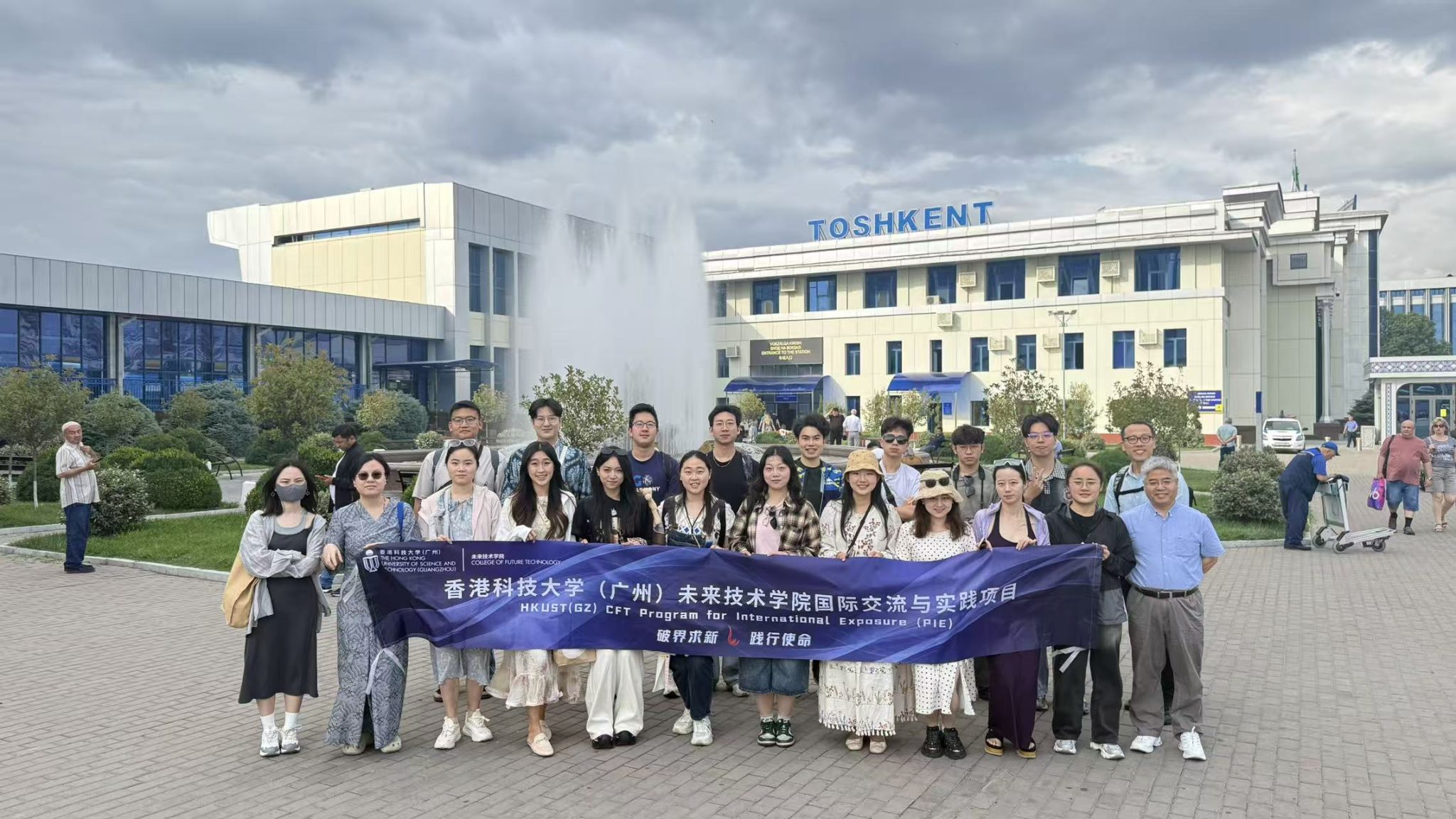
In May 2026, a team of faculty and students from the Red Bird MPhil Program (RBM) at College of Future Technology, HKUST(GZ) traveled over 4,000 kilometers to Uzbekistan, a pivotal hub on the ancient Silk Road.
They brought notebooks, questionnaires, and boundless curiosity with them. Nine days later, they returned with unexpected insights and a wealth of brand-new questions.
This is the Program for International Exposure (PIE).
Part 1 When Data Came Alive Beyond the Screen
After the plane landed and the coach pulled out of the airport, rows of Chevrolet vehicles streamed past the windows. Before the trip, Jiacheng Zhong had found that Chevrolet held nearly 90% market share in Uzbekistan—but this was only data on paper. As he arrived and the data came alive beyond the screen, he had a question: what logic underpins this market phenomenon?
Jixin Yang had conducted extensive pre-trip research on local fintech: Uzum valued at 1.5 billion (USD); digital payment volume tripling in two years… Yet after arriving in Uzbekistan, he spotted a stark gap between statistical records and real-world experience. What surprised him most was the fervent enthusiasm local youth hold for AI and entrepreneurship.
Between data and reality, between expectations and truth—this gap unfolded repeatedly over the nine days, becoming a shared focus for all five teams.
Every student sought their own way to understand the country.

Part 2 The Idea of Cultural Design Project
On a weekend after arrival, the group visited Samarkand. The blue domes left by the Timurid Empire shimmered under the midday sun with an almost surreal glow. Outside Bibi-Khanym Mosque, locals warmly invited students for photos.
"Even without a shared language, we all smiled brightly under the sun." —Yuelin Kuang
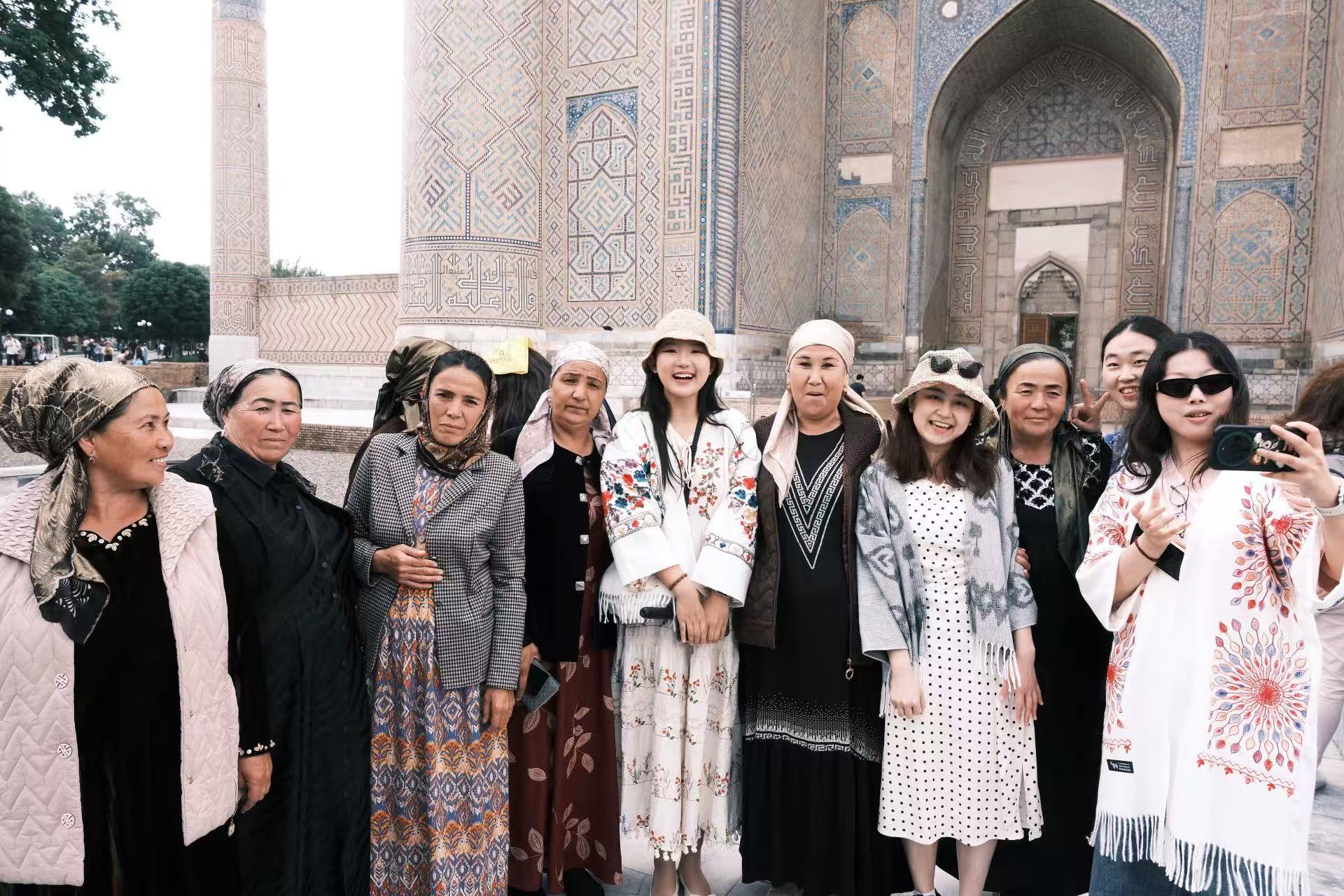
Standing before the historic architecture, Ruyu Jiang and Yuxiao Huang from Group 4 shared the same thought: why are these intricate tile patterns, dome curves and traditional ornaments only confined to postcards and fridge magnets?
This question later evolved into their team’s project, YammyMemory. The solution leverages AI to identify architectural patterns in travel photos, generate 3D printing mold templates, and translate these cultural motifs into edible, mass-producible cultural souvenirs. It allows tourists to take a piece of local culture home and share it with others.
Part 3 Lost Belongings and an Unexpected Project Idea
On the second day of the trip, a small incident reshaped the entire trajectory of Group 2. Before departure, they had decided on "digital banking" and "fintech" as their research topic and finalized their research framework. But after arriving, a new question lingered in their minds: how do people retrieve lost items here?
This question did not emerge out of nowhere. On their way to Samarkand, one team member lost his backpack at the train station, then left his phone in a taxi. "We felt utterly helpless facing information asymmetry and language barriers in a foreign land," said Chenyu Yuan. The team’s joint efforts to recover the lost items became the turning point for their research focus, shifting their attention to the socially meaningful study of lost-and-found mechanisms.
Thus, UzFind was born: a multilingual lost-and-found platform supporting Chinese, English, Russian, and Uzbek language. It connects tourists, residents, volunteers, and official authorities to make lost property reporting and retrieval more credible and efficient.
"A promising project does not have to start with grand-scale problems. Small, tangible real-life issues hold enormous room for improvement." —Ziwei Xu
"This was our first lesson: we must start from real problems, not from technology itself." —Chenyu Yuan
Part 4 Unexpected Discoveries During Company Visits
Local company visits formed a core component of this event. The team toured TexnoPark, UzAuto Powertrain, Safia Bakery, Bayan Medical, TBC Bank, and many other enterprises spanning high-end manufacturing, modern services, bio-medicine, and cutting-edge fintech.
Technical specialists and senior management at the visited company demonstrated outstanding professionalism and global vision. They patiently answered every question from the students and held in-depth discussions about frontline industry trends. This allowed students to grasp the real dynamics of local overseas industries.
Safia Bakery’s visit validated the practical viability of Group 4’s project. It was far more than a handcrafted bakery: it operated a complete system covering raw material management, standardized recipes, sanitation protocols, cold chain logistics, and store distribution.
"Real-world industries are far more complex than textbook case studies."
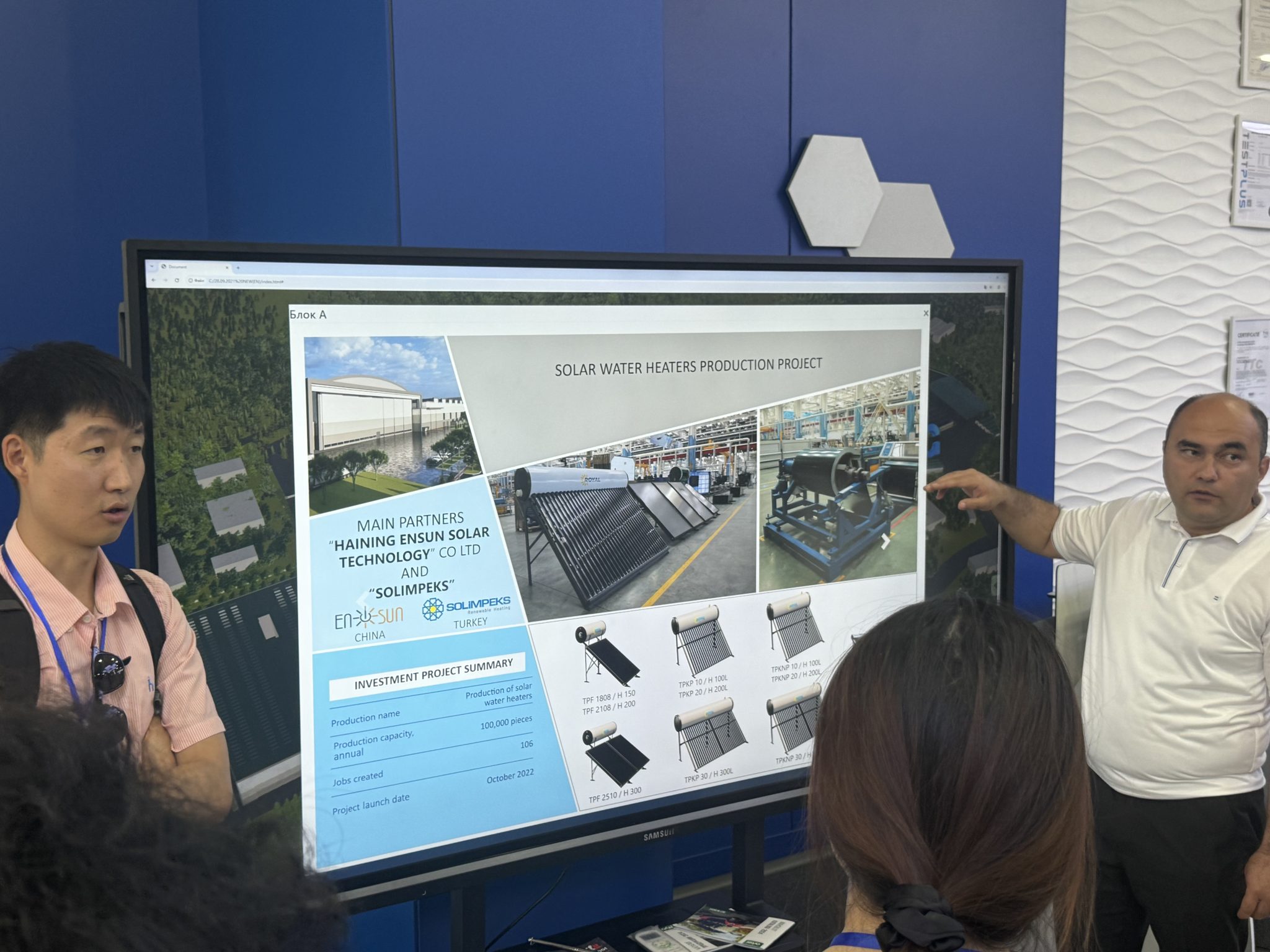
At TBC Bank, Jixin Yang from Group 5 raised a specific question: how do financial institutions conduct risk control for young people with no credit history? The answer made him realize that "quantitative analysis proves applicable to all business contexts."
Fintech had been Jixin Yang’s most anticipated research track before the trip. Yet through field research and corporate dialogues, he came to understand that "research must not be limited to familiar, comfortable research domains; you must understand the local context." His team ultimately changed their project to another field plagued by information asymmetry.
Part 5 Meeting Real People On the Streets
Research did not only take place inside corporate offices. It unfolded at markets, subway stations, park benches, and in casual chats with random passers-by.
Guided by Ozodbek, a volunteer from New Uzbekistan University(NewUU), Group 3 conducted questionnaire surveys in parks near the NewUU campus. "Respondents were overwhelmingly welcoming, making the survey work far smoother than we anticipated." Through conversations with locals, the team developed ChinaLink Education, a platform bridging Chinese and Uzbek education to eliminate information gaps for Uzbek students hoping to study in China.
Group 1 took another approach to explore the city, developing AutoGuide UZ to address information asymmetry within Uzbekistan’s automotive market. To validate their concept, they proactively contacted a local BYD dealership and interviewed sales staff and customers on-site. Kun Yang had the feeling of being an entrepreneur for the first time: identifying a real problem, actively sourcing resources and conducting field research independently.
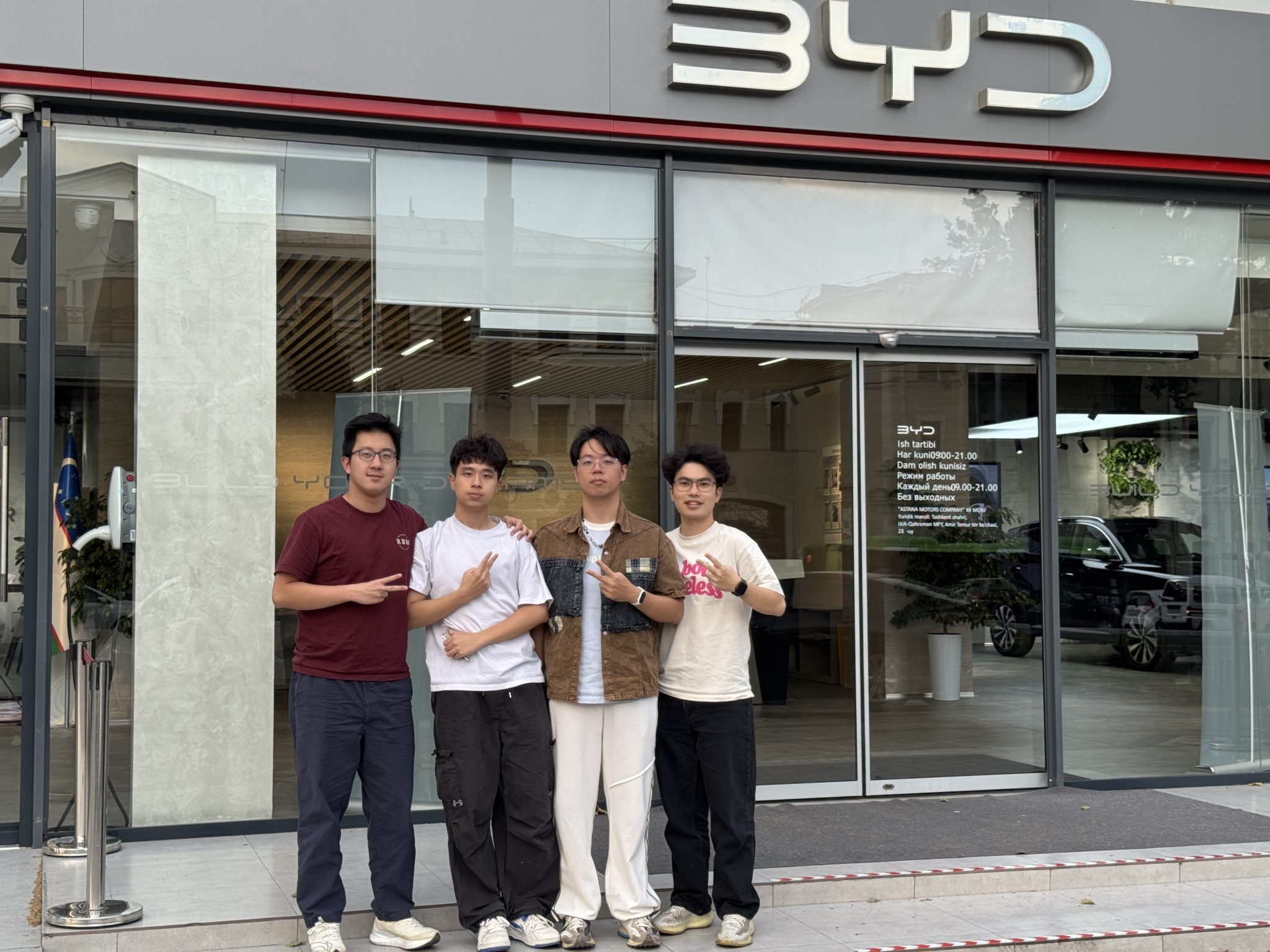
"Learning often takes place from uncertainty. We need interdisciplinary and cross-cultural competence to tackle complex real-world challenges." —Junkai Ling
Part 6 Debates, Divergences, and Finalized Directions
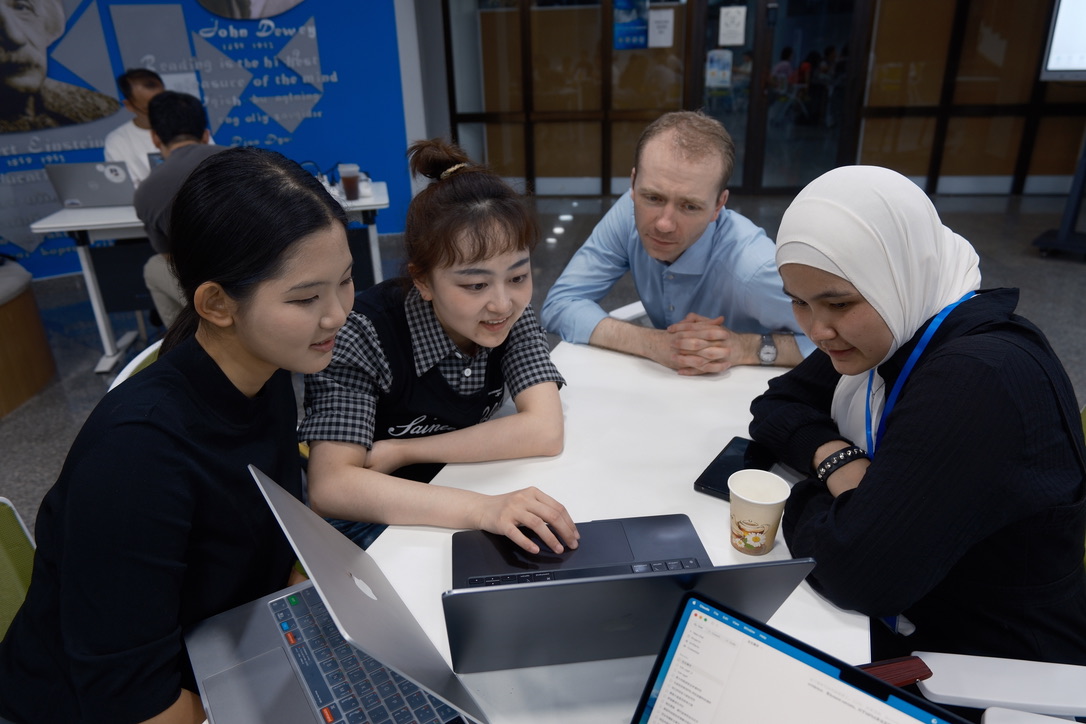
After the students finished company visits and field surveys, PBL (Project-Based Learning) discussions kicked off on the NewUU campus.
Group 5’s final project, Click Tourist Mode, is a travel platform exclusively for foreign visitors exploring the Silk Road in Uzbekistan. This research direction was only finalized after rounds of debate and compromise.
Tingyu Zhu recounted that the team initially held conflicting views on problem definition: some prioritized payment convenience, others focused on elevating the overall tourist experience. "It was chaotic at first, with intense exchanges of differing opinions. But disagreements were not a setback—they helped us break down core problems more clearly, transform vague, abstract ideas into tangible, implementable solutions."
Part 7 The Guiding Questions From Supervising Faculty
A carefully structured framework underpinned the entire program. Lead supervisors Arthur Lin and Li Chen did not assign fixed research topics to students. Instead, they immersed the students in on-site project contexts, guiding them to observe user behaviors and connect field research findings with product design.
The faculty emphasized that "process outweighs final outcomes", encouraging students to pursue in-depth exploration and learning rather than focusing solely on polished presentations.
For Group 4, supervisor feedback marked a critical turning point. "In the early stages, we only focused on creating visually appealing cultural bakery souvenirs featuring architectural motifs," said Beinuo Zhou. "Guided by supervisors, we gradually recognized that a strong project cannot rely merely on creative design—it must respond to real users, market demands, and local cultural contexts." This shift transformed YammyMemory from a visual design concept into a fully-fledged product solution.
When Group 2 proposed to change their project to a lost-and-found platform, supervisors did not push them back to their original agenda. Instead, they asked two questions: Have you interviewed actual end users? Is this pain point widespread enough to warrant a solution? Equipped with these guiding inquiries, the team went to the local streets to validate the feasibility of their idea.
"Supervisors guided us to conduct rigorous real-world research,
rather than merely completing a presentation report." —Jiazhuo Chen
By balancing free exploration with rigorous validation,
all five teams reached their unique research outcomes.
Part 8 New Uzbekistan University: The Warm Heart of This Journey
The program launch ceremony was held at New Uzbekistan University(NewUU) on May 25. Professor Azizbek Avazjonovich Marakhimov, Vice-Rector for International Affairs at NewUU, and Professor Xudong Wang, Dean of the College of Future Technology at HKUST(GZ), delivered opening remarks. Faculty and students from both universities held in-depth conversations on international education, youth talent cultivation, and innovation & entrepreneurship practice, quickly fostering close bonds between the two sides.
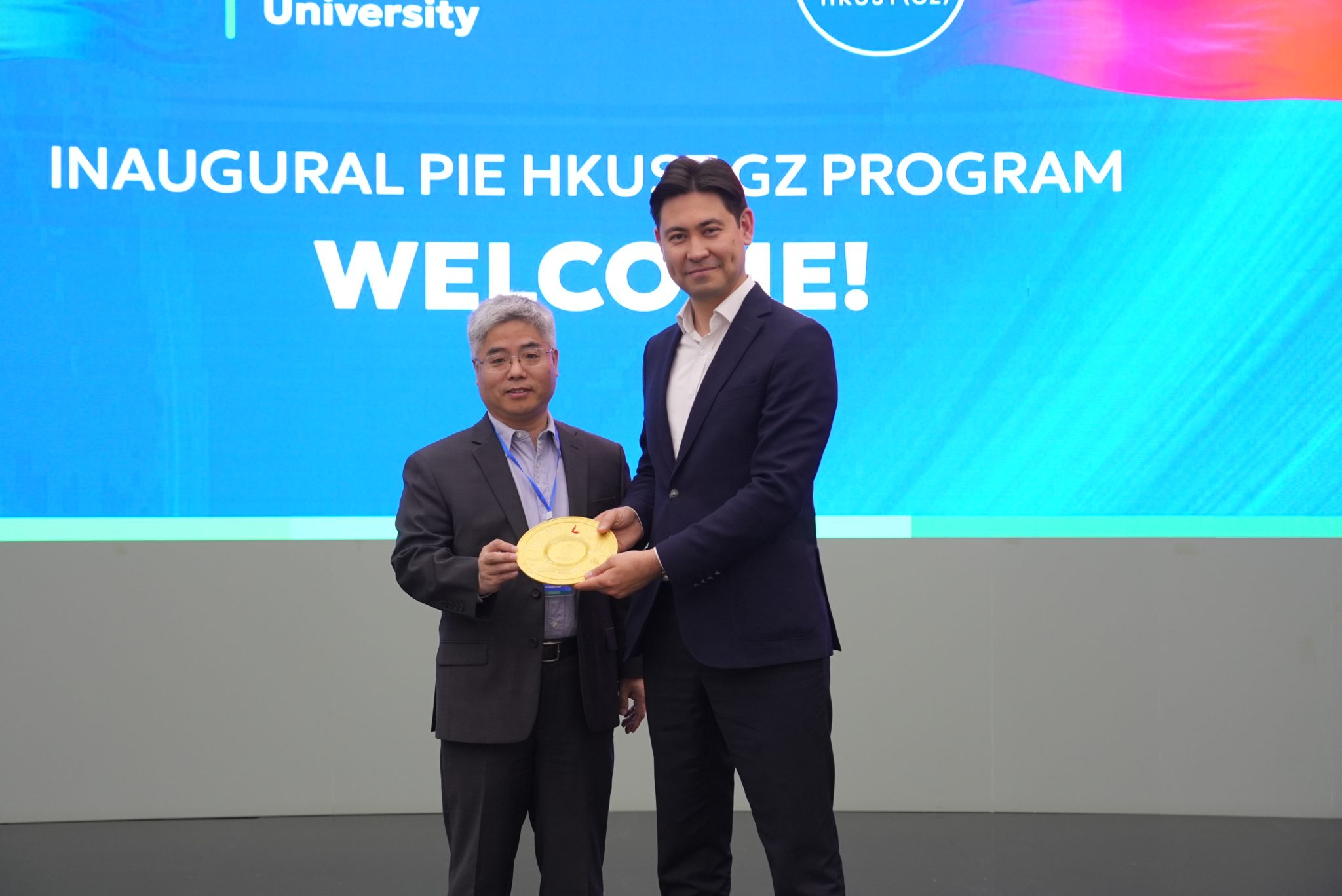
The program’s success would not have been possible without full support from NewUU staff. They coordinated company visits and organized a series of special lectures covering economic development, energy transition, agricultural transformation, and industrial ecosystems. During the Eid al-Adha holiday, NewUU professors gave up their holiday time to deliver lectures.
"These lectures were far more than introductory background material," said Yuxiao Huang. "They helped us move beyond superficial impressions of historic architecture to grasp the country’s potential in agricultural development, industrial transformation, youth education and international collaboration."
NewUU student volunteers accompanied the student teams throughout the program. Ozodbek guided the group to conduct surveys, using his natural rapport with locals to streamline data collection. Sador and Niso provided critical local cultural context, helping RBM students frame survey questions in natural, accessible language. When one of the students fell ill, volunteers stayed by her side to communicate with medical staff and complete administrative procedures.
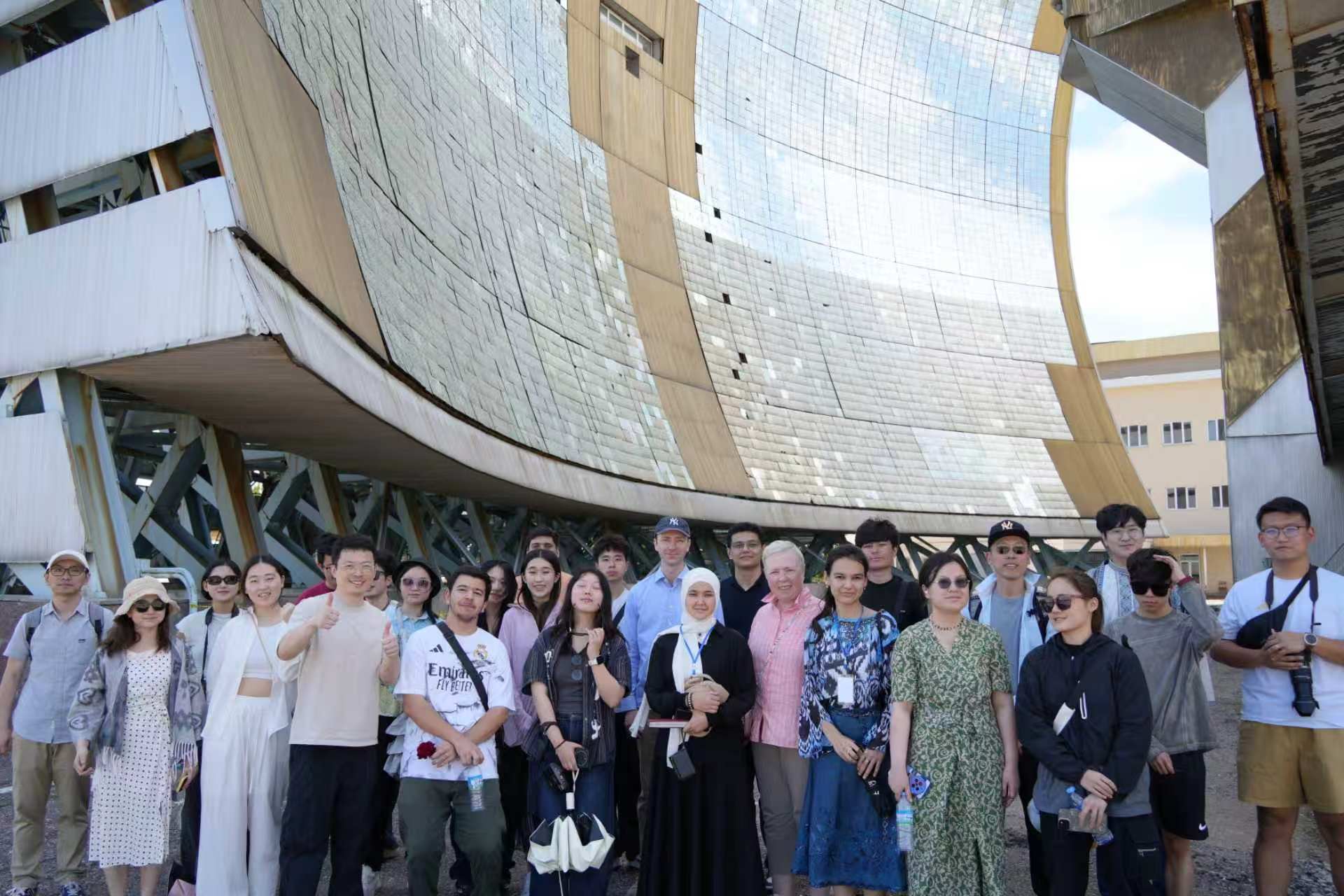
Names including Niso, Sador, Sam and Ozodbek were mentioned repeatedly by every student.
On the closing day of the program, Professor Bahodir Ahmedov, Rector of New Uzbekistan University, delivered a summary speech. He praised the program’s achievements and proposed sustained collaboration between the two institutions.
Beyond research deliverables
Students returned home with cross-cultural friendships forged over the nine days
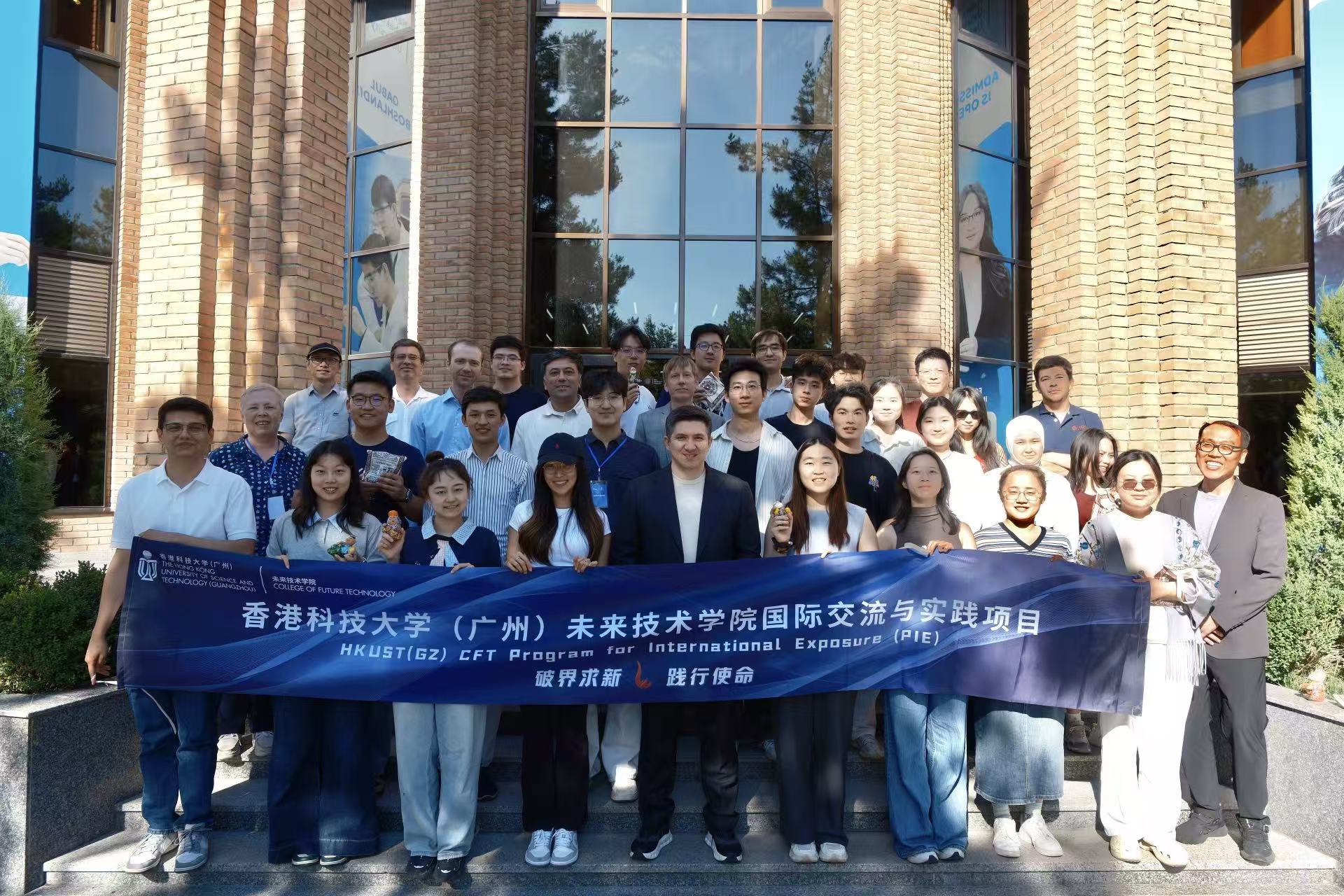
Part 9 Epilogue: Returning With New Questions
The night before the project roadshow, temperatures in Tashkent dropped to a comfortable level. Students from all five teams stayed up late: some proofread questionnaire data, others refined product logic, and the rest polished design drafts.
That night, Jixin Yang chatted with local university students about mobile payment models, explaining WeBank’s operational framework. His conversation partners grew visibly excited: “We need solutions like this here too.”
“In that moment, I knew all our field research had not been in vain.
It enabled me to build genuine connections within an entirely unfamiliar cultural landscape
—and that is the true essence of the PIE:
It is far more than a cultural experience trip.
We arrived with questions,
and we left with brand-new ones.”
—Jixin Yang
May 29 marked the final roadshow day. Students who had wandered Samarkand’s streets, conducted street surveys, and debated late into the night stepped onto the stage to present their refined project prototypes.
(Click to view the introduction of five projects)
AutoGuide UZ – Uzbekistan’s automotive information platform, resolving market information asymmetry (Group 1)
UzFind – Multilingual lost-and-found platform born from real experiences of misplaced personal belongings (Group 2)
ChinaLink Education – Educational exchange platform bridging information barriers for Uzbek students pursuing further education in China (Group 3)
YammyMemory – AI-powered cultural souvenir solution converting travel photos into edible cultural crafts (Group 4)
Click Tourist Mode – All-in-one travel platform delivering seamless Silk Road travel experiences for foreign visitors (Group 5)
“We start with questions, and we came back with new ones.”
This sentiment was echoed across nine days in countless languages,
yet it never felt overstated.
What is Uzbekistan?
It is the dazzling Timurid tilework;
It is street cleaners using GPT translation at subway stations;
It is the eager support of local student volunteers;
It is an immature credit infrastructure still under construction;
It is a rapidly growing land brimming with untapped opportunities.
Uzbekistan is not a single answer—it is a series of more profound questions.
Under construction …
Under construction …
Under construction …
Under construction …
Under construction …
Under construction …